Research Focus
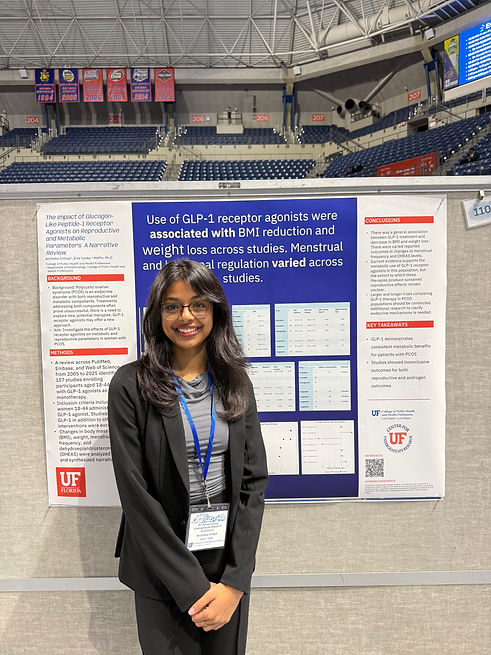
This narrative review investigates the effects of glucagon-like peptide-1 (GLP-1) agonists on reproductive and metabolic parameters, examining their influence on weight and BMI changes, menstrual frequency, and DHEAS levels. The review aims to explore the mechanisms by which GLP-1 agonists may improve metabolic and reproductive outcomes in PCOS, providing insights into their potential as a targeted therapeutic option for symptom management and long-term health improvement.
Responsibilities
In this role, I conducted a narrative review evaluating the effects of GLP-1 agonist drugs on menstrual cycle regularity and related symptoms. Through this process, I gained hands-on experience with the literature review workflow, including developing effective search strategies, screening research articles, and preparing studies for future data analysis. This work enhanced my ability to critically assess scientific literature and strengthened my skills in organizing and synthesizing complex research findings.
Abstract
Polycystic ovarian syndrome (PCOS) is a common endocrine disorder affecting reproductive-aged women. It can be characterized by hyperandrogenism, ovulatory dysfunction, and metabolic irregularities. Insulin resistance and obesity are prevalent and contribute to both the metabolic and reproductive aspects of PCOS. While lifestyle changes and metformin remain first-line therapies, reproductive outcomes are inconsistent. Glucagon-like peptide-1 receptor agonists (GLP-1) have emerged as a potential therapy due to their effects on insulin sensitivity and weight reduction. This review evaluated the effects of GLP-1 receptor agonists on metabolic and reproductive parameters in women with PCOS. A review across PubMed, Embase, and Web of Science from 2005 to 2025 identified studies enrolling participants aged 18-44 treated with GLP-1 agonists as monotherapy. Studies combining GLP-1 therapy with other interventions were excluded. Changes in body mass index (BMI), weight, menstrual frequency, and dehydroepiandrosterone sulfate (DHEAS) were analyzed and synthesized narratively. Across studies, GLP-1 therapy consistently decreased BMI and body weight. However, studies showed varied menstrual frequency outcomes and DHEAS levels. Overall, GLP-1 treatment demonstrates consistent benefits metabolically for patients with PCOS, but the reproductive and androgen outcomes remain inconclusive across studies. Future research is necessary to clarify long-term clinical effects.